Circus Train: History, Life Aboard & Legacy
hace 1 semana · Actualizado hace 1 semana
A circus train was a train used by traveling circus companies to transport performers, workers, animals, wagons, and equipment between cities. During the 19th and 20th centuries, these trains helped American circuses expand their tours and bring large productions to audiences nationwide. Ringling Bros. and Barnum & Bailey became especially famous for its railroad operations, which ended in 2017, although other circuses continued using trains.
The history of these traveling shows reveals how the trains operated, what life was like aboard them, how Ringling's final journeys unfolded, and their lasting cultural legacy.
History of Circus Trains
For much of the 19th and 20th centuries, railroads helped transform traveling circuses from relatively small wagon-based shows into productions capable of visiting distant cities. The shift happened gradually, as showmen learned to make rail travel practical and audiences gained access to larger performances.
Circus Trains in the United States: From Wagons to Railroads
American circuses experimented with railroad travel as early as the 1830s. Those early efforts remained limited: rail lines did not form a seamless national network, track gauges varied, and moving equipment between trains and performance grounds was cumbersome. Horse-drawn wagons were often simpler for shorter tours, so there is no single, universally accepted starting point for the first circus train.
The completion of the transcontinental railroad in 1869 opened new possibilities. That year, Wisconsin showman Dan Castello traveled by train from Omaha to California with his circus, which included two elephants and two camels. His successful tour demonstrated that railroads could bring elaborate entertainment to audiences far beyond a circus's traditional route.
Castello soon joined forces with P. T. Barnum and William C. Coup. Their show initially traveled by wagon in 1871 but switched to rail in 1872. Coup designed a new flatcar-and-wagon system that allowed workers to roll fully loaded circus wagons onto railroad flatcars, reducing one of the biggest obstacles to touring. Rather than limiting a show to places reachable by wagon roads, the railroad made longer circuits and larger productions economically viable.
The growth was dramatic. Their 1872 train measured approximately 1,200 feet, while Barnum & Bailey's train reached roughly 3,600 feet by 1897. Large circuses also sent advance representatives ahead to advertise performances and arrange local services. The train was becoming more than transportation: it was an essential part of the circus business model.
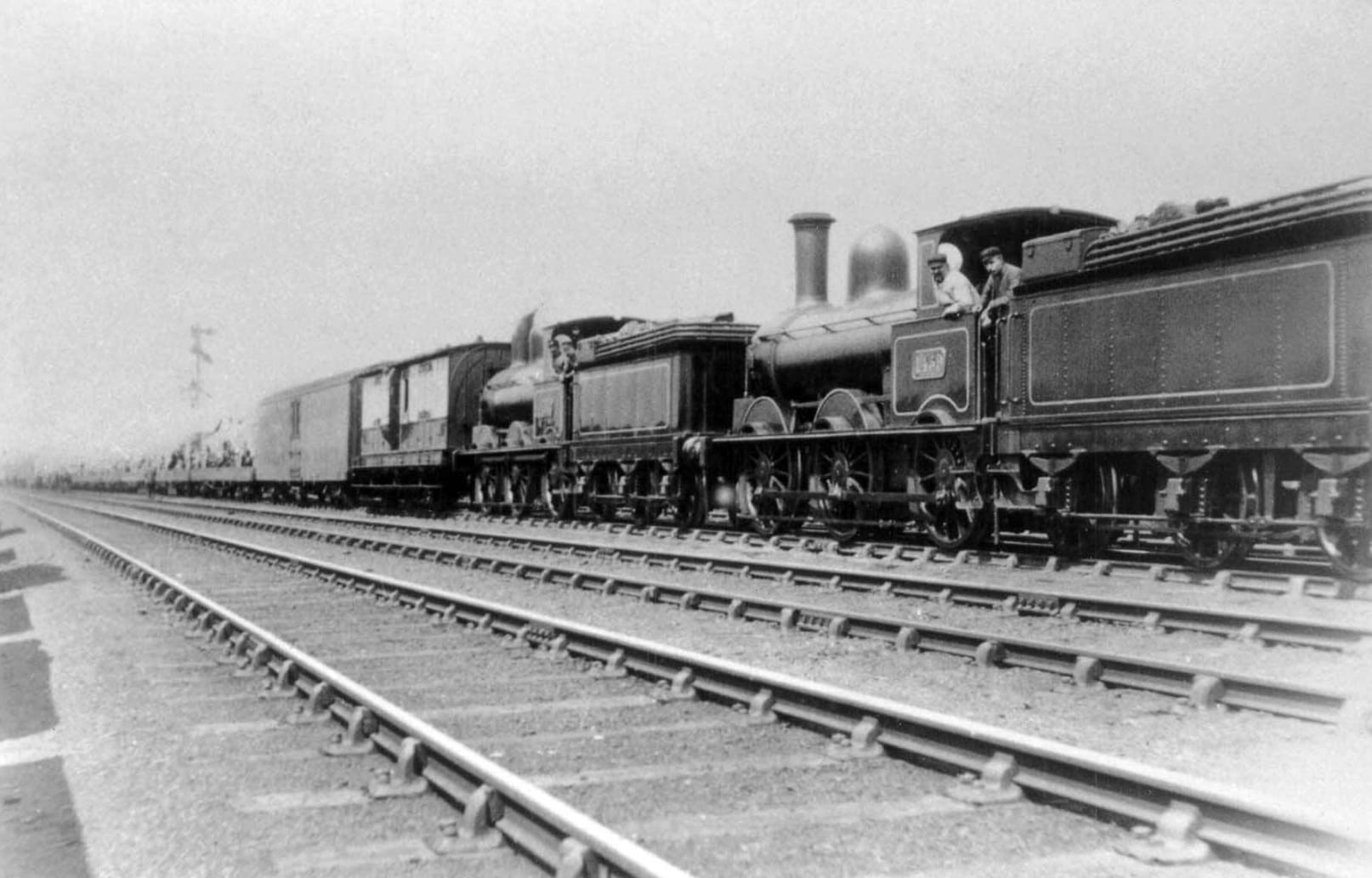
A widely cited historical tally estimates that in 1903, at least 38 of the 98 American circuses operating that year traveled by rail. But the system gradually lost its dominance. Wartime railroad restrictions, changing costs, and improvements to highways encouraged more shows to use trucks. From just two railroad circuses in 1939, the number briefly rebounded to six in 1945 before the longer-term decline resumed. Ringling Bros. and Barnum & Bailey became the best-known survivor of the tradition, continuing railroad tours into the 21st century.
Circus Trains in Europe
European circuses also made use of rail transport, particularly in Germany, where traveling shows began adopting trains in the 19th century. Their development followed different local rail networks and operating arrangements rather than the American model of increasingly enormous cross-country trains.
Unlike some American companies, German circuses often relied on freight cars supplied by railway operators or leasing companies. Circus Krone even maintained a specially owned railcar for transporting elephants.
Circus Krone used rail transport well into the late 20th century, with its last rail movements reported in 1999. Circus Roncalli continued using trains much later, including during the 2020s. These examples show that circus trains were not exclusively American, nor did the practice disappear everywhere when the largest U.S. railroad circus ended its operations.
How Did Circus Trains Work?
A circus train operated as a traveling transportation and support system, moving an entire production between cities. Its specially arranged railroad cars carried performers, workers, animals, vehicles, and equipment, allowing large circuses to relocate without dismantling their operations into separate shipments.
Train Cars for Performers, Animals, and Equipment
Unlike ordinary passenger trains, circus trains combined several types of railroad cars, each serving a different purpose.
Passenger coaches provided transportation and, in some cases, living quarters for performers and staff. Larger operations used converted sleeping cars with bedrooms, shared facilities, and space for personal belongings.
Specialized animal cars transported horses, elephants, and other animals featured in circus performances. These cars were adapted to accommodate their occupants, with provisions for ventilation, feeding, and access for handlers.
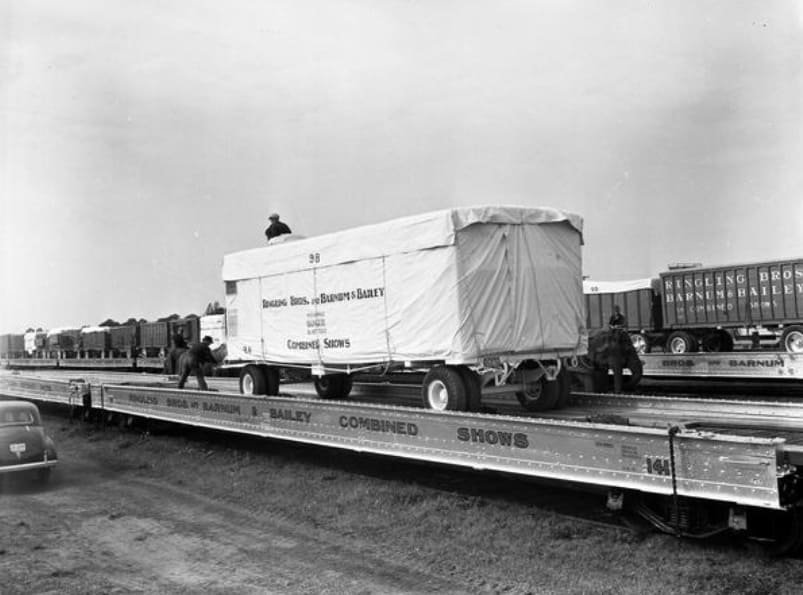
Meanwhile, railroad flatcars carried circus wagons, trucks, generators, and other heavy equipment. Some trains also included storage and service cars for supplies, tools, and materials needed to keep the show operating.
Together, these different cars formed a mobile infrastructure capable of supporting hundreds of people and substantial amounts of equipment.
How Circus Wagons and Equipment Were Loaded and Unloaded
Loading and unloading a circus train required careful coordination, particularly when dozens of wagons and vehicles had to be transferred between railroad cars and the performance grounds.
A common method involved positioning ramps at one end of a line of flatcars. Connecting ramps between the cars allowed wagons to move along the train rather than requiring each car to be unloaded separately.
Depending on the period and equipment, crews used pulleys, winches, trucks, or other machinery to move heavy loads. Once positioned, vehicles and equipment were secured for travel.
Much of this work took place after the final performance in a city. Crews packed equipment, moved it to the railroad siding, and loaded the train for departure, often working through the night.
This system helped circuses move substantial productions between engagements while minimizing delays in their touring schedules.
Life and Work Aboard a Circus Train
For many performers and employees, the circus train was both transportation and home during long tours. Converted passenger cars provided sleeping accommodations, while shared spaces helped support everyday activities between performances.
Living conditions varied considerably. Some workers occupied small private rooms, while others shared accommodations. The amount of space and available facilities depended on the circus, the train, and an individual's role.
Daily routines combined travel with rehearsals, equipment maintenance, animal care, and preparation for upcoming performances. Time aboard also allowed colleagues and families to socialize between demanding workdays.
Over months of traveling together, these shared experiences created close-knit communities. For some circus families, life on the train became an essential part of their identity, extending far beyond the performances audiences saw.
The Last Ringling Bros. and Barnum & Bailey Circus Train
For generations, the Ringling Bros. and Barnum & Bailey circus train was both a means of transportation and a familiar sight along American railroads. Its final tours in 2017 brought an end to one of the country's best-known railroad traditions, although circus trains elsewhere did not all disappear.
The Red and Blue Units of the Ringling Bros. Circus Train
In 1969, Ringling began operating two separate touring productions, called the Red Unit and Blue Unit. Each had its own cast, equipment, and railroad train. Their schedules were arranged so that different versions of the show could visit major markets in alternating years, extending the circus's reach without requiring one enormous company to cover every city.
The trains were substantial operations in their own right. In 2017, the Red Unit consisted of 54 railcars, while the Blue Unit had 56, according to published railroad equipment records. These figures reflected the scale of two independent productions rather than a division between performers and equipment: each train supported an entire touring show. Over time, the distinctive red and blue markings became familiar to railroad enthusiasts and families who watched the circus arrive in town.
The Circus Train's Final Journey in 2017
Ringling retired its performing elephants in May 2016, following years of debate over animal welfare. In January 2017, the company announced that its remaining shows would close, citing declining ticket sales and high operating costs. The elephants' departure contributed to the changing circumstances, but it should not be treated as the sole reason for the shutdown.
The Red Unit held its last performance in Providence, Rhode Island, on May 7, 2017. The Blue Unit's final engagement ended at Nassau Veterans Memorial Coliseum in Uniondale, New York, on May 21. The last public performances and the trains' final movements were separate events.
During the Blue Unit's final trip toward New York, photographers documented its passage through West Virginia and Virginia on May 8–9. Families gathered along the tracks, employees waved from open coach doors, and performers entertained children during a stop in Shenandoah, Virginia. These scenes illustrated how the train had connected circus workers with the communities they visited.
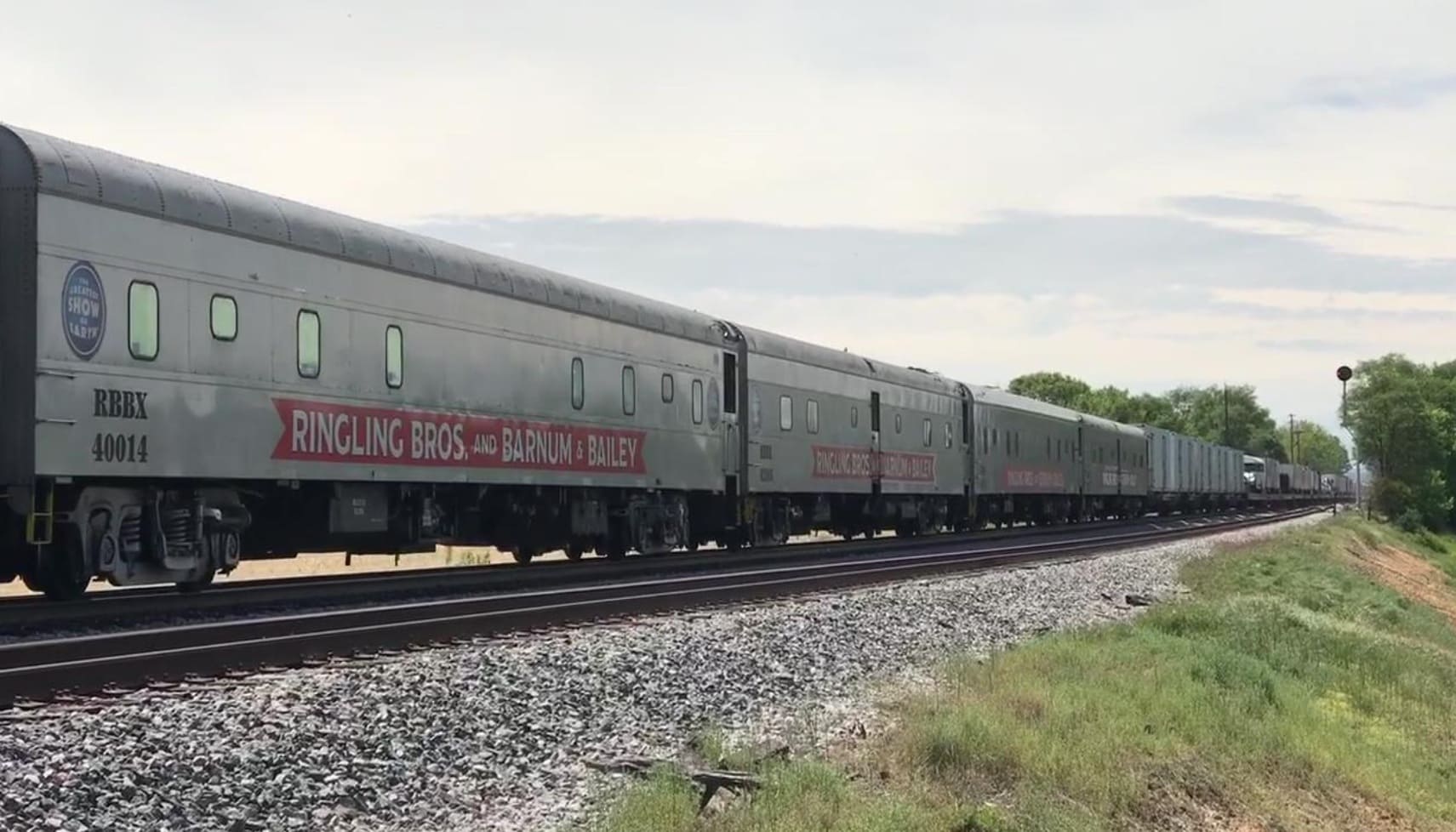
According to Conrail's October 2017 account, the loaded Blue Unit crossed New Jersey toward its final engagement on Long Island, while the empty Red Unit reached Oak Island Yard after Providence. Following the last performances, both complete trains returned to Oak Island, where their cars were separated for buyers. Unsold cars went to Palmetto, Florida, for final disposition.
What Happened to the Train Cars After 2017?
The equipment was not preserved as a single train. Some cars were auctioned or sold for other purposes, while others were dismantled. Kirby Family Farm, an educational nonprofit in Williston, Florida, acquired former Ringling coaches and flatcars for exhibits and programs; CSX helped deliver a group of them in 2018.
The North Carolina Department of Transportation purchased nine former circus cars in 2017, hoping to refurbish them for its Piedmont passenger service. The project did not proceed. Four cars were destroyed by fire in 2022. Of the five that survived, two were sold to tourist-railroad operators in New Hampshire and West Virginia, while a company bought the other three with plans to scrap them.
Ringling returned to touring in 2023 with a redesigned show featuring human performers and road-based transportation rather than its former railroad operation. The end of the Ringling train marked the close of a particular American circus tradition, not the end of circus rail travel worldwide.
Circus Trains in Popular Culture
Circus trains became a recognizable symbol of traveling entertainment, representing both the excitement of a show arriving in town and the lives of performers between engagements. Several popular films have used these trains as settings for adventure, drama, and behind-the-scenes storytelling.
- Dumbo (1941): Disney's animated classic features Casey Jr., the steam locomotive that transports the circus and its animals. The train became one of the film's most recognizable elements.
- The Greatest Show on Earth (1952): Cecil B. DeMille's drama portrays Ringling Bros. and Barnum & Bailey, featuring its traveling railroad operation. A dramatic train collision becomes a major turning point in the story.
- Indiana Jones and the Last Crusade (1989): The opening sequence features young Indiana Jones escaping through a moving circus train, encountering animal cars and performers during the chase.
- Water for Elephants (2011): Set during the Great Depression, the film uses a traveling circus train as a central setting, portraying the relationships, working conditions, and daily lives of circus employees.
Together, these films featuring circus trains preserve the image of the railroad circus as both a remarkable spectacle and a close-knit traveling community.
Related articles: